

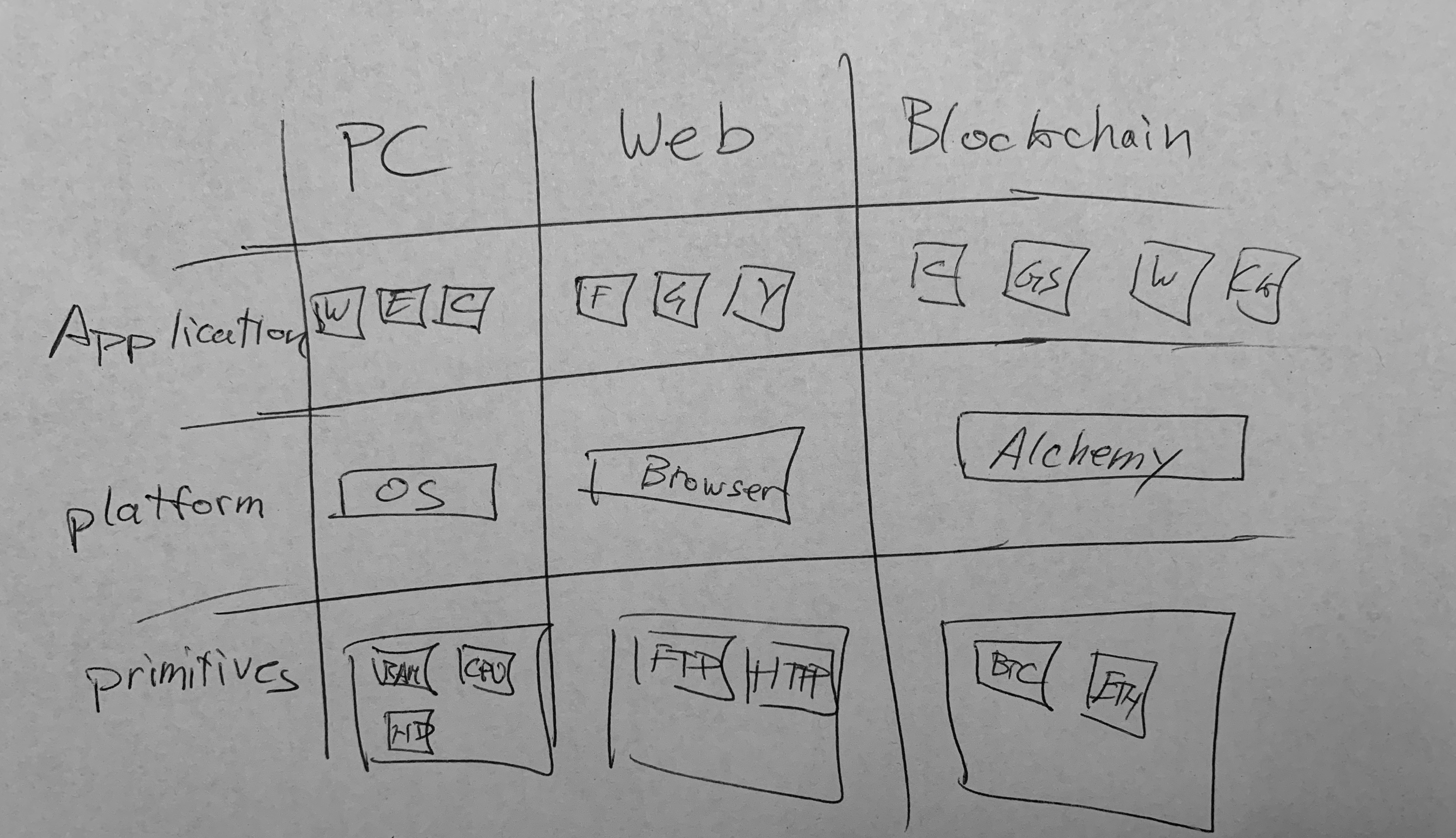
If the operating system linked computer systems and software application, and if browsers connected HTTP to web apps, Alchemy desires to be the bridge allowing the blockchain environment. It’s this middle layer that’s produced Microsoft, Apple and Google– some of the most important companies worldwide
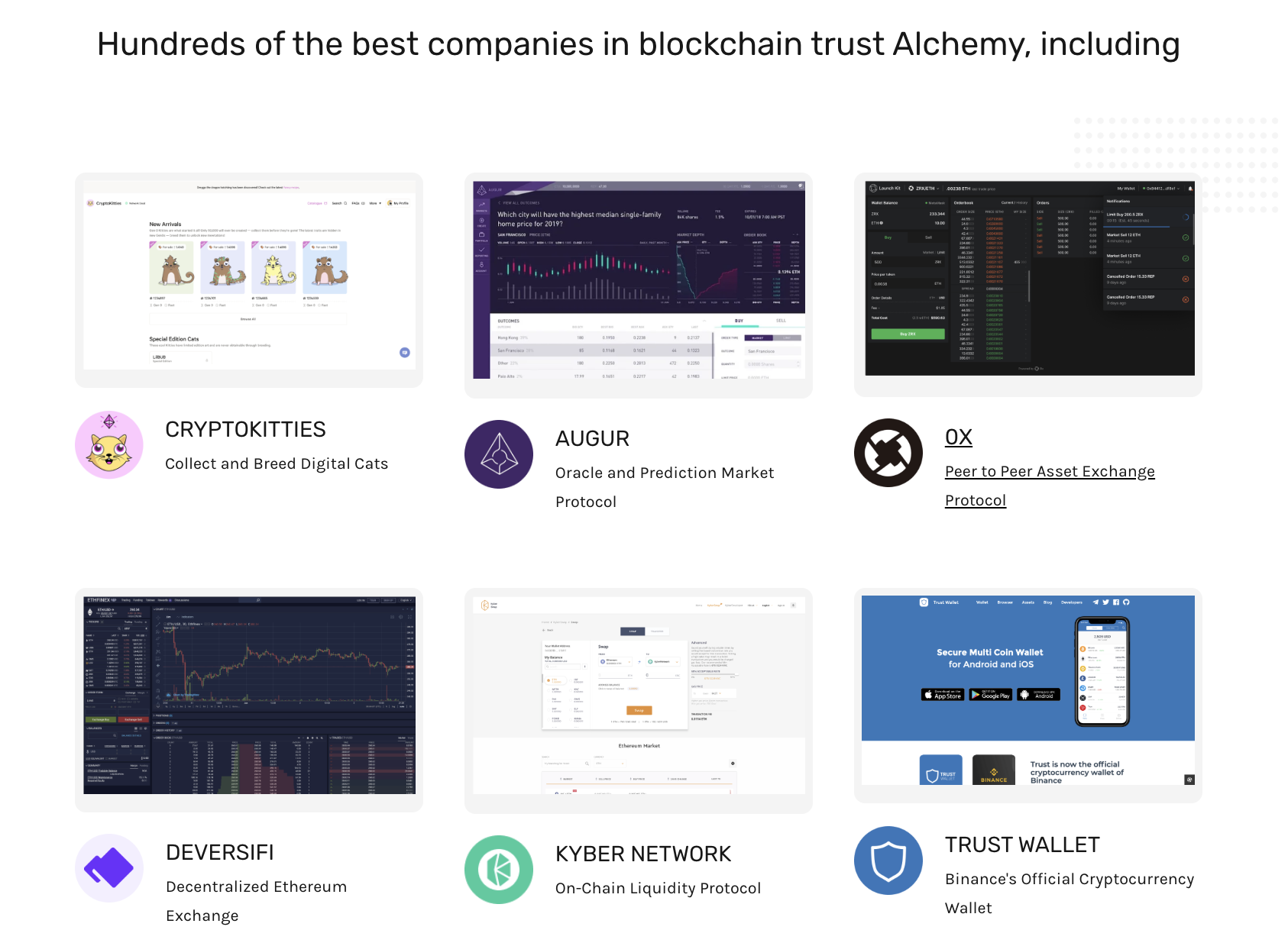
. How does Alchemy work? It replaces the nodes that organisations use to read and write blockchains with a much faster, more scalable decentralized architecture. It likewise supplies tools for analytics, tracking, alerting, debugging and logging for cryptocurrency-connected software application. The two-year-old start-up currently powers infrastructure for numerous companies serving over one million clients in 200 countries per week, consisting of huge names like Augur, 0x, Cryptokitties, Kyber and the Opera web browser.
“Right now people are trying to build skyscrapers with choices and shovels. We need
The top cryptocurrency business have actually quietly begun to outsource their infrastructure issues to a tiny stealth startup. It’s called Alchemy. Today it’s making the huge public expose of its technology that could assist designers lastly construct the killer usage case atop Bitcoin or Ethereum.
“For any brand-new innovation, designer infrastructure and tools are needed to make it possible for broader application development and adoption. We’ve seen this happen in previous tech waves like PC and the web,” states Yang, who rarely does interviews. “Alchemy is trying to do the exact same thing for the blockchain area … they have the opportunity to meaningfully accelerate the entire blockchain market.”
to provide building devices,”Alchemy co-founder and CEO Nikil Viswanathan tells me.”None of this exists for blockchain.”Financiers are lining up to see that it will. Alchemy is now announcing that it has raised $15 million through a seed round and now a Series A led by Pantera Capital, and signed up with by Stanford University, Coinbase, Samsung, SignalFire, plus angels like Charles Schwab, Yahoo founder Jerry Yang, LinkedIn creator Reid Hoffman, Google chairman John Hennessy and more.
From Down to Lunch to decentralized apps
Now, the majority of Alchemy’s lean group– founders consisted of– are honestly readily available to customers by means of Telegram for immediate support. Viswanathan validates a CEO fielding grievances, stating “It’s not just great client assistance. It gives us really excellent user feedback.” He doesn’t desire that to change, even with the brand-new cash from investors, consisting of Stanford’s StartX, Mayfield, Kenetic, Dreamers and previous Thompson Reuters CEO Tom Glocer.
So when cryptocurrency struck the zeitgeist in 2017, they cast aside the budding successors to < a class="crunchbase-link"href="https://crunchbase.com/organization/down-to-lunch"target="_ blank"data-type="organization"data-entity= “down-to-lunch”> Down to Lunch they ‘d constructed, and dove in head first. Through the disappointment of spinning up nodes to construct anything decentralized, they found the chance to start something with more possible than a college kids’ social app. They saw the possibility to seize the bridge layer of the next computing platform– the blockchain.
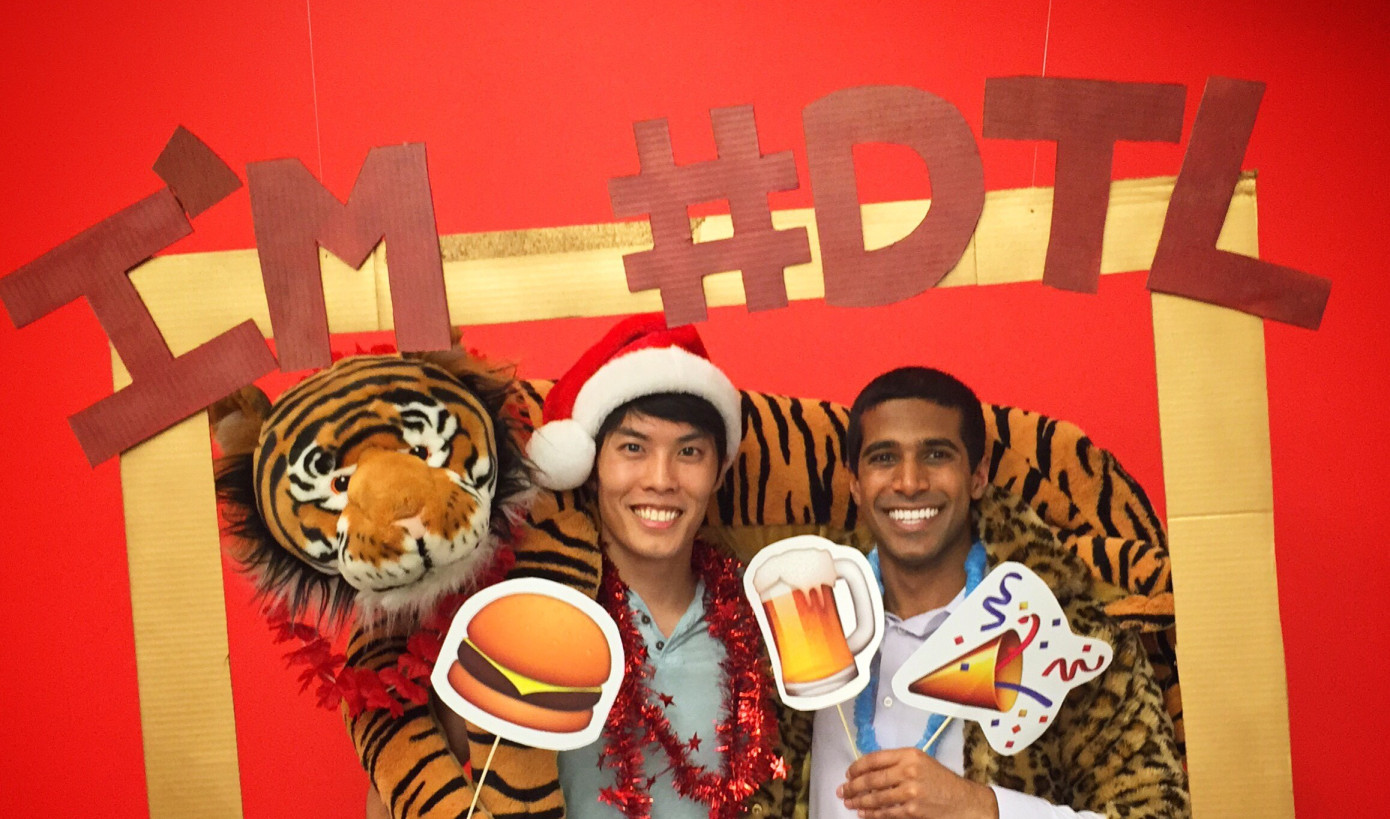
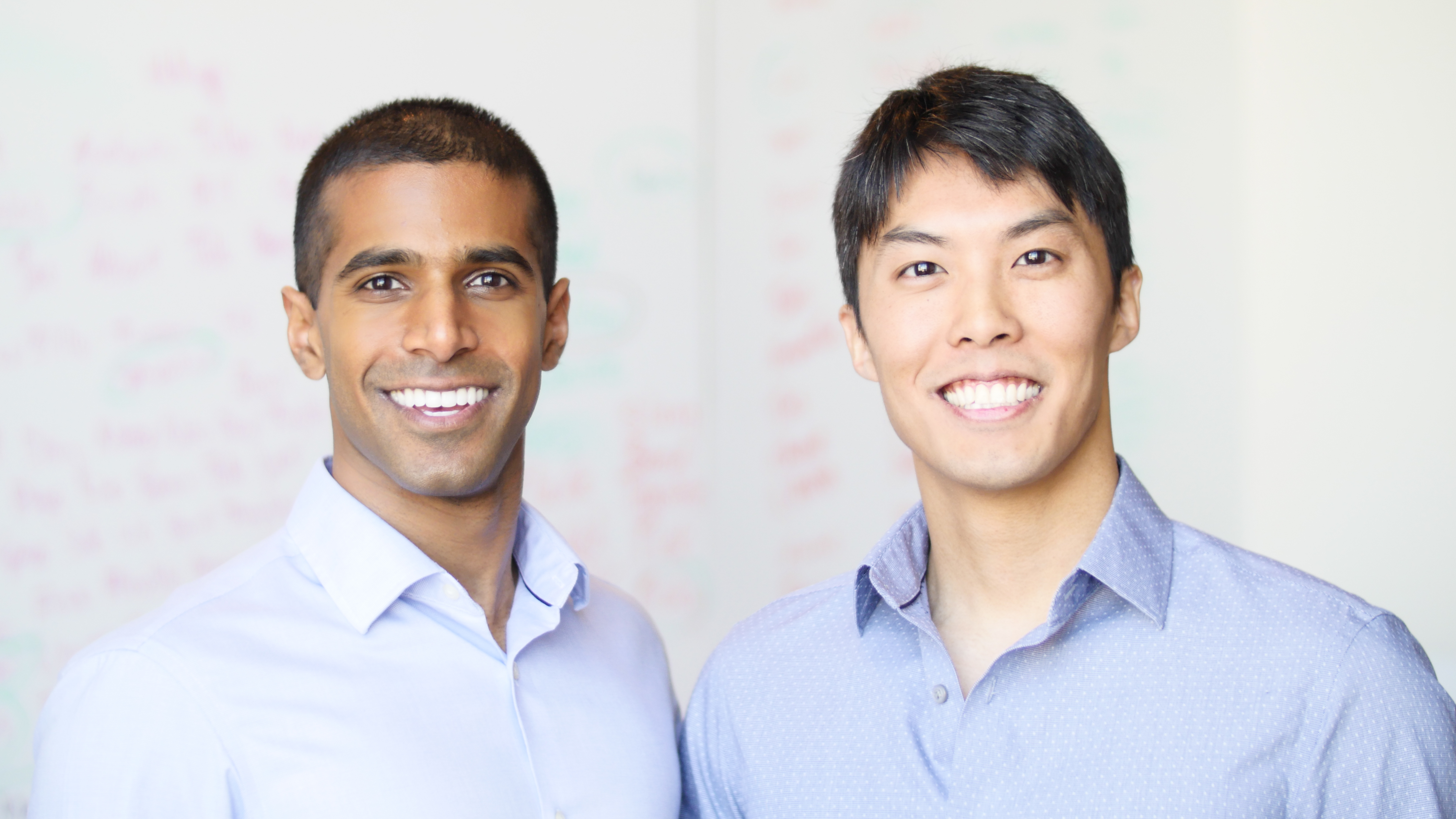
Alchemy co-founders(from left): Nikil Viswanathan and Joe Lau Viswanathan and co-founder and CTO Joe Lau already had a shot at the startup A-league. For a short moment, their simple social app for learning if friends might hang out through emojis, called Down to Lunch, topped the app rankings and had VCs beating down their door with term sheets. But the set of Stanford computer technology graduates got knocked off the charts by a vicious rumor that their app assisted kidnappers, which they call a purposeful negative campaign.
One method the duo is rollovering from Down to Lunch is permitting any Alchemy client to contact them directly. They actually put their phone numbers inside DTL to keep their ears open for issues, however soon were receiving about 10,000 text messages daily from the app’s millions of users, rendering Viswanathan’s iMessage unusable. He shows me the “You’re our only hope” email he Hail Mary ‘d to Tim Cook asking for a repair that was eventually granted.
Viswanathan and Lau are understood in entrepreneur circles for welcoming the thrifty ramen-fueled start-up life, with Lau having actually once spent six straight days in the office to keep things afloat while Down to Lunch was blowing up. They still run a scrappy ship, with staffers sitting on cardboard boxes up until chairs arrive for their still snug however brand-new office.
In spite of its momentum, it’s right away clear that Alchemy doesn’t wish to become another overhyped blockchain pledge that doesn’t provide. “There are two vanity metrics in Silicon Valley,” Viswanathan states. “How much money you’ve raised and the number of people you have on your team. In truth, you want to keep both of these as low as possible while being a big success.”
The 2 were durable, however, drawing on Viswanathan’s time in product management mentored by executives at Google, Microsoft and Facebook. He sat beside Mark Zuckerberg, brought Steve Ballmer to campus and had meetings with Larry and Sergey. His takeaway was that “You can have massive impact on the world. If thi can do it, we can do it too.”
It’s not magic, it’s Alchemy

“Since utilizing Alchemy, our team has been able to refocus its time on developing new item functions for Augur that we would not have actually had the ability to otherwise,” Augur’s director of operations Tom Kysar tells me. “We used to spend a notable quantity of time handling facilities issues, and now we do not worry at all.” His prediction market start-up composes that Alchemy fixed 98% of dependability concerns and made its users’ applications load 3X quicker.
However Alchemy also takes motivation from Microsoft, providing a range of tools for handling decentralized apps. These consist of analytics for tracking use, monitoring of efficiency and availability, notifying to notify teams when things break, logging for tracing back errors and debugging for getting apps running right once again. On the conventional web, this would be the work of numerous start-ups, but since blockchains standardize the database and how it’s accessed, Alchemy can do all of it and is currently constructing more tools.
Alchemy utilizes an entire different decentralized architecture, states Lau. This lets it separate various kinds of information into unique information stores for much faster and more reliable access. The result is that it’s much easier to construct apps on Bitcoin, Ethereum and other coins with fewer engineering resources. Because sense, it’s not unlike an Amazon AWS for blockchain.
“It’s 1972. Who used computer systems? Just computer business. By 2019, the entire world. In 1992, who used the web? Just internet companies. By 2019, the whole world. In 2019, who utilizes blockchain? …” Viswanathan explains.
Making the very same true for blockchain is Alchemy’s goal. Typically just to start, organisations need to spend 10s of thousands of dollars to set up and run nodes that can translate and compose to blockchains. It’s not just slow and expensive, but it draws up a heap of engineering resources. And even worse yet, node architecture may not with dignity support enormous scale. Load balancing throughout servers, as is conventional with web applications, breaks down when nodes wrongly return block numbers out of sync. Blockchain apps run sluggish and buggy, or crash entirely. Developers spend nights awake fighting fires.
Another heartening sign? Alchemy has currently turned away acquisition interest. “For us, costing $100 million or $1 billion isn’t a success,” Viswanathan says. They want to empower a generation of designers.
“I’ve been carefully involved in business that formed the earlier internet like Google,” says Hennessy, the former president of Stanford. “What Alchemy is doing in blockchain has the potential to be similarly transformational, and Nikil and Joe have the deep technical background and proven entrepreneurial track record to make it happen.” The 30-year-old Lau tells me the suggestions of older tech luminaries is invaluable. “Hennessy saw the increase of computers. It’s great to have people who saw things we didn’t see.”
The implication is that ubiquitous adoption is concerning deals entwined with code, and blockchain will become so typical we do not even discuss it the very same method. “No one says ‘I’m utilizing an internet application,'” Viswanathan laughs.
Crypto exchange AirSwap dropped the node system it had actually constructed and open-sourced to use Alchemy rather. Another client said it got 25 % of its engineering personnel back. When I looked at its top rival in facilities, the Ethereum founder-backed Infura, many of the customers it notes on its site are now in fact dealing with Alchemy. “Alchemy has grown silently and rapidly to become a leading facilities company. We’re delighted to see how Alchemy will press forward the crypto environment,” says Coinbase COO Emilie Choi.
“This is what spins the inovation cycle”
“These innovation moves occur every 20 to 30 years. If this is a massive innovation shift, we have a chance to build a truly foundational business in the area. It’s not about the cash,” he concludes with a bright-eyed smile. “There are numerous less demanding methods than start-ups to make money.”
Many start-ups have passed away waiting. Why will Alchemy persevere? The creators state it’s a sense of responsibility to pay it forward. “I just feel so fortunate to live in 2019 and have innovation and computers and web. Never prior to in human history before the last 20 years might you construct something and possibly have everybody on the world’s life enhanced by it,” Viswanathan tells me.
In the very first age, IBM undervalued the marketplace of personal computer systems, enabling Microsoft to swoop in with Windows that opened PCs to third-party software application devs. In the second age, it was the web browser and after that the mobile OS that let Apple and Google conquer the middle ground in between HTTP and our favorite apps. Alchemy presumes that profitable spot in Viswanathan’s vision of the blockchain-equipped third age. “This is what spins the innovation cycles and increases speed of advancement,” he says of this facilities layer.
At my dining room table in San Francisco’s Mission District, Viswanathan giddily scribbles out a grid to chart the history of developer platforms.
The genuine question, however, is among timing.” The most significant danger is how rapidly will crypto become an enormous market,”Viswanathan admits. He says Alchemy is already making a reasonable amount of money selling tools and service bundles that begin in the tens of thousands of dollars. It might require its innovation to boost the blockchain designer flywheel by powering a breakout success serving mainstream consumers that might in turn bring in more developers to the market.
Convincing designers, particularly incumbent corporations, to contract out an essential part of their infrastructure to Alchemy might be tough for the engineering-focused start-up. It only hired its very first salesperson last week to help pitch huge banks and commerce giants captivated by blockchain’s efficiencies. Crypto zealots may likewise balk at running their decentralized apps through a. main platform. Thankfully, because Alchemy powers whatever from exchanges to video games to finance to integrating dispersed journals into traditional companies, it just requires something to win on the blockchain.
“Right now people are attempting to build high-rise buildings with shovels and choices. One method the duo is carrying over from Down to Lunch is enabling any Alchemy customer to call them straight. Making the exact same true for blockchain is Alchemy’s objective. The real question, though, is one of timing. Many startups have passed away waiting.
