
Here’s the most recent. 1. The president came out swinging. In a six-page letter to Speaker Nancy Pelosi, President Trump denounced the impeachment questions in angry terms, asserting that he had done absolutely nothing incorrect which Democrats would pay a political price in 2020.
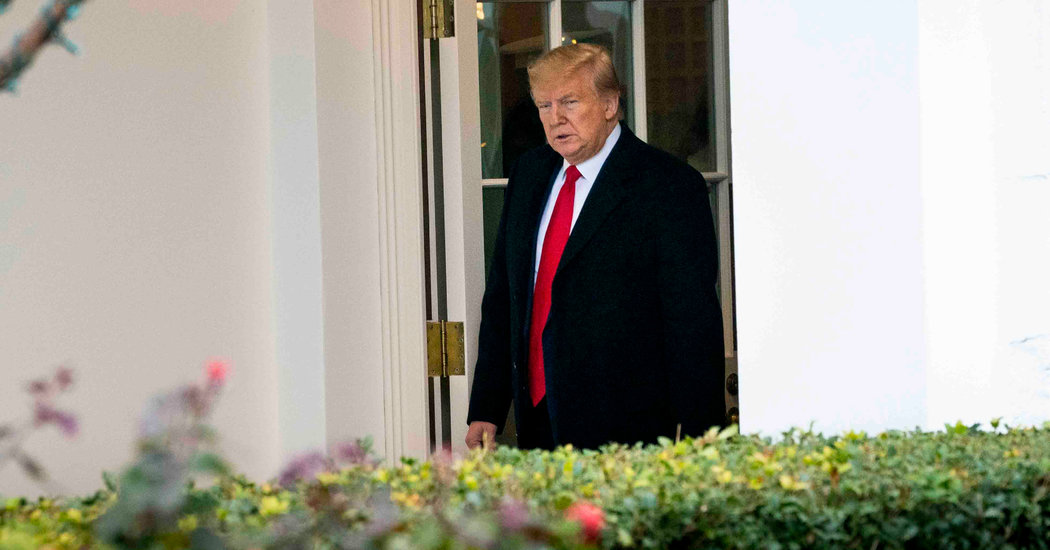
Mr. Trump, pictured above at the White House today, stated he knew his letter would not alter the outcome of tomorrow’s impeachment votes by the capacity, which are anticipated to take place almost completely along party lines.
Prosecutors did not oppose Mr. Gates’s ask for probation. They highly urged the judge to take into account what they called his “extraordinary” efforts to help private investigators, consisting of with inquiries that remain secret. Above, Mr. Gates in February of last year.
Individually, William Taylor, the leading U.S. diplomat in Ukraine and a crucial impeachment witness, stated he is stepping down in January since his short-term visit is expiring.
3. A judge purchased the F.B.I. to
change how it performs wiretaps. It was the first public action by the deceptive Foreign Intelligence Surveillance Court to the scathing findings launched last week by the Justice Department’s inspector general about the wiretapping of a former Trump consultant, Carter Page.
The investigation exposed a litany of mistakes and errors by case agents who cherry-picked the evidence about Mr. Page as part of the Russia investigation as they looked for consent to eavesdrop on his calls and emails. Above, the J. Edgar Hoover Building in Washington, which the F.B.I. occupies.
The court “anticipates the government to provide accurate and total info in every filing,” the judge composed.
< aside class="css-ew4tgv" aria-label=" companion
column”> 4. A huge action towards avoiding a federal government shutdown. Your house approved two costs plans assigning $1.4 trillion for the federal budget, designating top priorities like raising the tobacco purchase age to 21.
The procedures were developed to have sufficient goodies for both celebrations to ensure their passage and protected President Trump’s signature. The Senate is expected to vote before a due date on Friday, when funding will go out.
Independently, the Senate overwhelmingly passed a$738 billion defense expense, sending out Mr. Trump one of the most expensive military procedures in the nation’s history. He is expected to sign it this week.
5. Twelve states released an ambitious plan to cap tailpipe emissions. The coalition of states in the mid-Atlantic and Northeast, along with the District of Columbia, proposed a cap-and-trade program to suppress what is now the biggest source of planet-warming gases. More than a fifth of the U.S. population would be impacted by the program
, which would set a cap, to be decreased gradually, on the total quantity of carbon dioxide that can be launched from lorries that use gas and diesel. Above, Thanksgiving eve traffic in New York City. The effort, which must be authorized by state legislatures, is most likely to raise costs at the pump as fuel manufacturers hand down expenses to customers. 6. Authoritarian tactics in India. Prime Minister Narendra Modi’s government has cut off the internet 93 times so
far this year and 134 times last year, more than any other nation, according to a tracking group. Kashmiris have not had web access because August. And recently, the northeastern states of Assam, Meghalaya and Tripura lost their connections in the middle of demonstrations
against a brand-new citizenship law that will reduce the path of migrants who are not Muslim. Above, a demonstration in Delhi today. In all, 60 million people lack internet. The authorities say they are attempting to stop the spread of misinformation, which can move quicker than their efforts to control it. However it’s a tactic typically used by authoritarians, not democracies, to suppress dissent.
7. Millions in cryptocurrency disappeared when a C.E.O. died– or did he? Gerald Cotten, the 30-year-old head
of a Canadian cryptocurrency exchange, was the only one who understood essential passwords when
he passed away, the company said, making a minimum of $250 million of investors’ funds inaccessible.
Now investors desire evidence he did not fake his death. Their attorneys have asked to exhume his body and conduct an autopsy “to confirm both its identity and the cause of death.”
In a Jan. 14 Facebook post, the company announced that he had actually passed away more than a month previously from Crohn’s illness– an inflammatory bowel disease that is seldom deadly– while traveling in India.
8. Juicy Fruit’s ancient forerunner? Researchers are studying this heap of primitive chewing gum that dates back 5,700 years to discover ancient Scandinavians.
Hunter-gatherers in the region utilized a gooey tar from birch bark to fix arrowheads onto arrows and to fix a variety of stone tools. They also rolled the pitch in their mouths and chewed on it.
More crucial to scientists is that when they spat the gum out, the DNA in their saliva was preserved. The resulting hereditary map is supplying clues about individuals who settled in the area, the sort of food they consumed and even the type of bacteria they continued their teeth.
9. A village without any kids– just numerous dolls. Tsukimi Ayano comes from Nagoro, Japan, a diminishing village whose primary school shut down in 2012. It’s a consequence of Japan’s declining and aging population, a pattern felt most intensively in rural areas. Distressed by the loss, she led her good friends in creating some 350 natural dolls.”I wish there were more kids since it would be more joyful,”she said.”So I made the kids. “Her productions now surpass human locals by more than 10 to 1.
10. Cursive composing is not dead.
Cursive fans argue that a computer system or phone keyboard is still not quite approximately the job of signing a yearbook or backing a check. Edbert’s principal says trainees practice printing or handwriting right after lunch: “It soothes the trainees down.”
Schools in 24 states now need some type of cursive guideline, including 7 that have actually adopted policies given that 2013. New Jersey is now considering its own required.
Hope your evening is smooth and streaming.
Your Evening Briefing is published at 6 p.m. Eastern.
And do not miss Your Morning Briefing. Sign up here to get it by email in the Australian, Asian, European, American or african morning.
Wish to capture up on previous instructions? You can search them here. What did you like? What do you wish to see here? Let us understand at briefing@nytimes.com!.?.!.
