
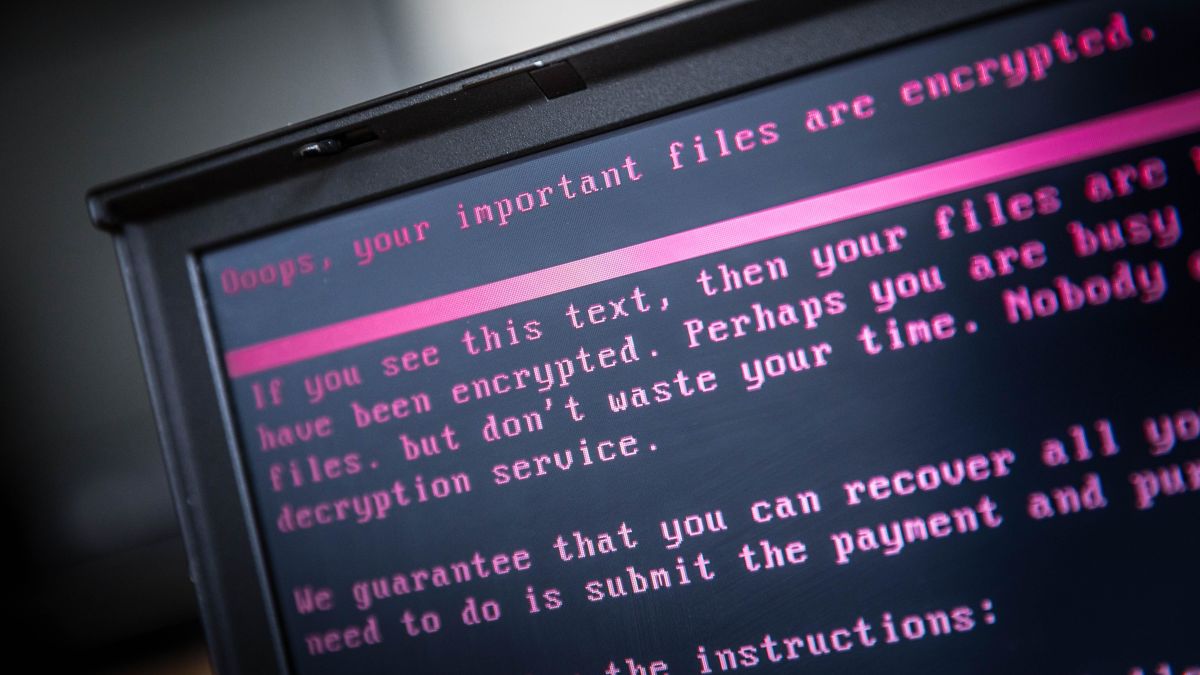
Ransomware operators are closing out a year of obtaining city governments, medical facilities, and schools across the country with a bang, with at least four more U.S. cities succumbing to advanced scams this month alone and a current report tallying the overall variety of events at almost a thousand. In Pensacola, Florida, a cyberattack using the Maze malware and demanding$US1($1.5)million in ransom forced city officials to detach numerous devices from the network
to prevent the infection from dispersing. Florida Department of Law Enforcement officials said that the attack appeared to involve the same Maze malware as a different incident targeting security
company Allied Universal in November. New Orleans declared a state of emergency situation on December 13 after being struck hard with another variant called Ryuk, impacting at least 4,000 city computers. On Thursday, Mayor LaToya Cantrell announced that damages had exceeded the city’s $US3($ 4)million cyber insurance coverage policy which New Orleans would be increasing its protection to$US10($15)million next year. In Galt, California, a residential area of Sacramento, Galt interim City Manager Tom Haglund informed press reporters on December 17 that ransomware had corrupted both their e-mail server and telephone systems, resulting in a” significant impact” and forcing city staff members to interact by means of text and personal e-mails. In St. Lucie, Florida, ransomware targeting the county sheriff’s office took IT functions such as e-mails,
fingerprinting, jail prison, and background checks offline, according to TCPalm. Constable Ken Mascara declined to call the malware included, but informed press reporters on Dec. 17 that operations were largely continuing as regular and the department was”pretty confident we must be up and running within a couple of days. “Ransomware works by getting access to an offered network, frequently through approaches like phishing, prior to spreading out a destructive payload as far throughout it as possible. When it later activates, it encrypts whole file systems in a manner that is difficult to undo without understanding the decryption key. Attackers then generally offer to decrypt the file systems for a ransom, usually paid in cryptocurrency, but sometimes no ransom demand is ever sent. The FBI has actually prompted victims not to pay ransoms, which don’t guarantee that the operators behind the attack will in fact release the information and incentivise future attacks. It also wants victims to report when
they do so that the agency can build construct detailed profiles of cybercrime organisations demanding them. The FBI cautioned in October that while the number of random events has”sharply declined … losses from ransomware attacks have increased substantially, according to complaints received by IC3 and FBI case information.”It also said it expects that pattern to continue. Those losses can far overtake the extortion demands. Hackers that kneecapped the Baltimore city government for weeks in May 2019 required simply$US102,000($148,111 )in bitcoin, but damaged big amounts of data and cost an approximated$US18.2($ 26)million in recovery costs and lost or postponed profits. According to a current report by security firm Emsisoft, there have actually been at least 948 recorded ransomware attacks in 2019. That consists of 103 on”federal government entities,”759 on doctor, and 86 on universities. Emsisoft explained the continuous series of attacks as an”unmatched and unrelenting barrage” leading to possibly major situations like interruption of emergency services and other emergency situation care, loss of medical records, monitoring systems going offline, and cops unable to gain access to IT systems. That’s not counting things like city operations of all kinds, from tax payment systems and driver’s licence renewals, grinding to a halt sometimes. State federal governments have likewise been interfered with,
as in the case of an August 2019 attack on a minimum of 23 firms in Texas. Attackers have recently started extorting targets with the danger of releasing their information to the web. In the Allied Universal attack using Maze ransomware, for instance, the operators included required$US2.3($3)million in bitcoin and released 700 megabytes of the security company’s files when they didn’t pay up. In the Pensacola attack, Maze operators threatened to do the same with community government data. A website allegedly run by Maze operators has actually been posting information that seems taken from a number of corporations, consisting of an Ann Arbor, Michigan food market that wrote a blog site post
discussing that it had not paid off the”cyber-terrorists”included.” The switch to ‘double whammy’ attacks in which data is exfiltrated prior to being encrypted is most likely simply an experiment to see whether this method is more profitable than traditional encryption-only
attacks,”Emsisoft spokesman Brett Callow told Gizmodo via e-mail.”In other words, bad stars think that the additional leverage might make it more most likely that victims will pay. Whether this proves to be the case stays to be seen. Will business really pay on the basis of a pinky-promise made by wrongdoers not to launch information?”Emsisoft wasn’t able to come up with a reputable price quote of the costs, however it did note that”organisations ‘existing security weaknesses and the development of significantly sophisticated attack mechanisms specifically designed to exploit those weak points” had produced a”
ideal storm”throughout the year. It added that the events are exposing bad IT practices on the state and regional level and at many big institutions, with problems ranging from an absence of uniform standards to underfunding. A ProPublica report in August stressed that some companies and cities have actually depended on insurance coverage repayments for ransom payments as a less expensive alternative to losing earnings and hiring expensive specialists. Bret Padres, CEO of security company Crypsis, informed ProPublica that there’s”actually excellent cash in ransomware” not just for the enemies, however recovery professionals generated after the reality and insurer that benefit from offering coverage against extortion risks. Padres informed the website that it’s a” vicious circle “and a”hard cycle to break since everybody involved earnings: We do, the insurance coverage carriers do, the aggressors do.”
On Thursday, Mayor LaToya Cantrell revealed that damages had exceeded the city’s $US3($ 4)million cyber insurance coverage policy and that New Orleans would be increasing its coverage to$US10($15)million next year. In St. Lucie, Florida, ransomware targeting the county sheriff’s workplace took IT functions such as emails,
fingerprinting, jail prison, and background checks offline, according to TCPalm. The FBI has prompted victims not to pay ransoms, which don’t guarantee that the operators behind the attack will really release the information and incentivise future attacks. Emsisoft described the ongoing series of attacks as an”relentless and extraordinary barrage” resulting in possibly serious scenarios like interruption of emergency services and other emergency situation care, loss of medical records, surveillance systems going offline, and authorities not able to access IT systems. State governments have actually likewise been disrupted,
as in the case of an August 2019 attack on at least 23 agencies firms Texas.
